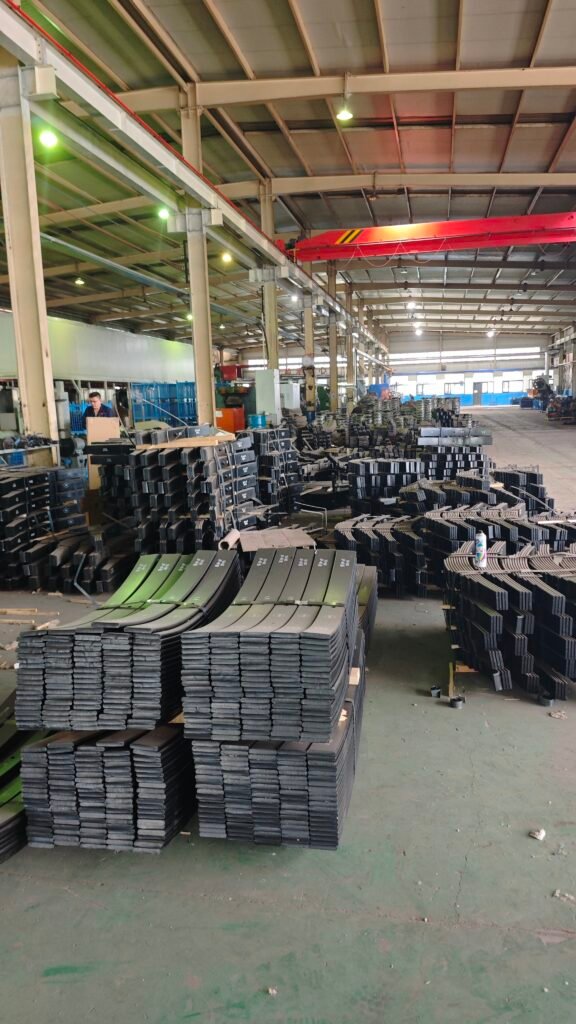
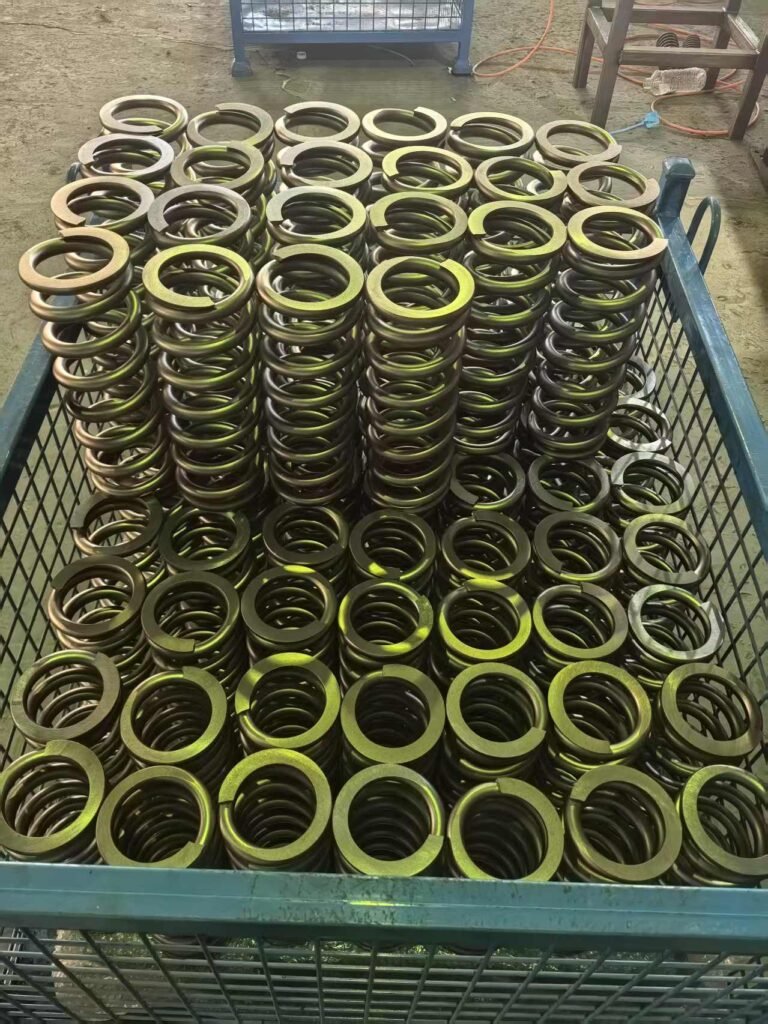
Precision manufacturing techniques are the backbone of spring performance. The source factory relies on CNC wire-rolling machines to maintain the geometric precision of springs within ±0.02 mm. For modified springs with complex shapes, multi-axis coordinated forming technology and specialized molds are employed to minimize material damage during the forming process and ensure uniformity in the spacing and diameter of each coil. In the heat treatment stage, controlled atmosphere heat treatment furnaces are used to precisely control the tempering temperatures of 850-880°C and 380-500°C, coupled with graded tempering processes to reduce residual stresses. High-performance springs are subjected to isothermal tempering, resulting in a high-toughness bainitic structure that significantly enhances resistance to impact.Given the unique requirements of modified vehicles, the customization capabilities of the source factory are particularly crucial. The technical team can use CAE simulation software for stress analysis and precisely design the elastic coefficient (K value), wire diameter, coil spacing, and length of the springs based on the vehicle’s self-weight, modification purpose, and tuning goals. This fundamentally resolves the challenges of matching springs and shock absorbers during the modification process. Whether it’s high-hardness competition springs tailored for track cars, anti-deformation heightening springs designed for off-road enthusiasts, or customized springs optimized for both comfort and handling for street vehicles, all can undergo full customization from design to mass production, ensuring that each spring perfectly fits the vehicle.