
1. Anti‑corrosion Protection to Extend Spring Service Life
The paint film fully coats the spring‑steel substrate, isolating air, rainwater, road de‑icing salt and sediment. It restrains rust and corrosion of spring steel, prevents stress concentration caused by corroded spots, and reduces the risk of spring fracture.
Anti‑rust primer can be applied to form a composite protective layer of “primer + topcoat”, improving salt‑spray resistance for harsh working conditions such as automotive chassis and outdoor equipment.
The paint film features excellent flexibility. When the spring undergoes repeated compression and rebound deformation, the coating deforms together with the spring. It resists cracking, peeling and flaking, matching the dynamic working characteristics of springs.
2. High Flexibility in Appearance and Marking
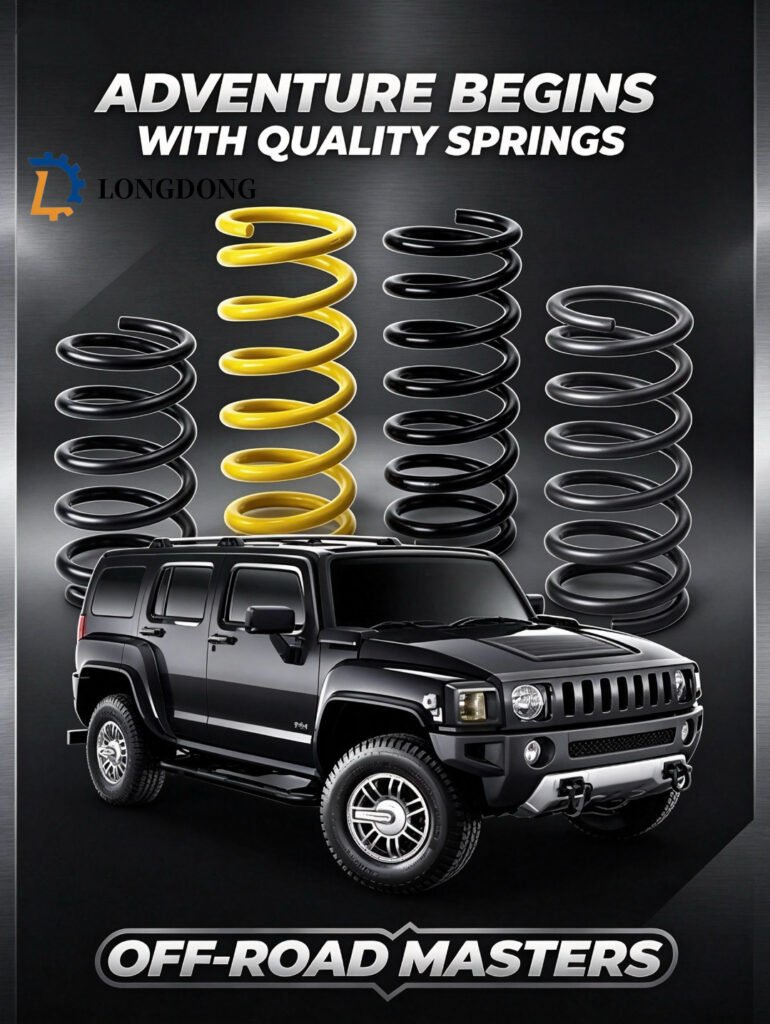
A wide range of colour options are available, including custom shades such as black, red and blue. Glossy, matte and metallic finishes are also achievable. Colour‑code marks (like the red‑and‑blue marks on your springs) can be added per customer requirements for easy identification of spring models and stiffness specifications.
It delivers a fine surface texture, covering minor surface defects generated during spring manufacturing and ensuring consistent product appearance.
It supports easy switching between small‑batch and multi‑specification orders with fast colour changes. Unlike powder coating, it requires no extensive cleaning of powder material, making it suitable for flexible production of diverse spring models.
3. Process Compatibility & Production Advantages
Wide workpiece compatibility: it processes coil springs of various wire diameters and heights. Rotating tooling for spraying improves coating coverage on coil gaps and outer surfaces and reduces missing‑spray spots.
Controllable film thickness: the typical paint‑film thickness ranges from 20‑80 μm, adjustable by spraying passes. Compared with thick powder‑coating layers, it avoids interference with coil‑to‑coil clearances due to excessive coating thickness.
Flexible equipment investment: it enables mass production on automated assembly lines and also caters to small‑and‑medium‑batch orders with strong versatility.
4. Comprehensive Cost Advantages
Initial equipment investment is lower than that of electrophoretic coating, offering better overall cost‑efficiency for low‑volume orders. Compared with electroplating, it incurs no heavy‑metal‑treatment costs and allows simple process adjustment.
Convenient rework and repair: local missing‑spray areas and defects can be directly touch‑up‑sprayed without scrapping the whole part, lowering reject losses.